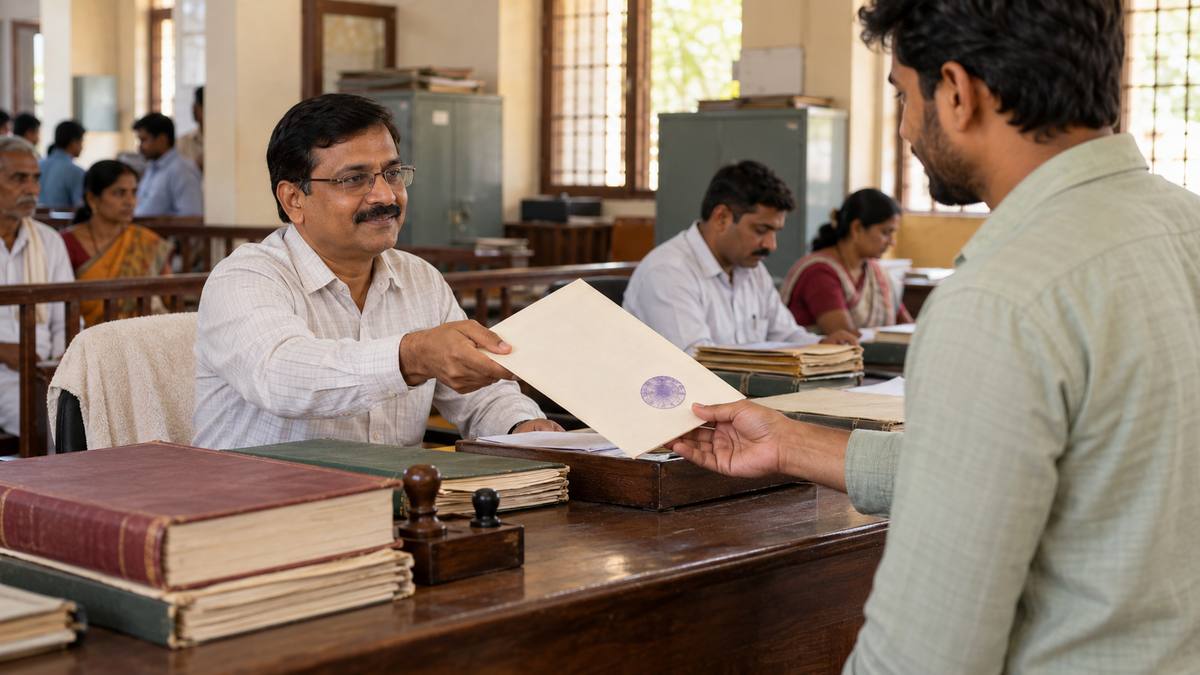
If you are buying property, taking a home loan or settling a family property, you will often be asked for an encumbrance certificate. In Uttar Pradesh it is commonly called the bhar mukt praman patra. This article explains what it is, what it does and does not show, and how to get one.
In short (Hinglish): Bhar mukt praman patra batata hai ki property par registered sale, mortgage ya loan jaisa koi bhaar (encumbrance) hai ya nahi. Isse IGRS UP portal ya sub-registrar office se liya ja sakta hai, lekin court case ya unregistered agreement isme nahi dikhte.
What is an encumbrance certificate?
An encumbrance is a charge or claim on a property, for example a mortgage to a bank, an earlier sale, a lease or a gift. An encumbrance certificate is a record, issued from the registration department, of the registered transactions on a property during the period you ask for. If no registered transaction is found for that period, it is often described as a "nil" encumbrance certificate.
When do you need it?
- Before buying land, a house or a flat, to check earlier registered sales and mortgages
- When applying for a home loan or loan against property, as banks usually ask for it
- For mutation, partition or family settlement of property
- When selling, to show buyers that the property is free of registered charges
How to get it in Uttar Pradesh
- Collect the property details: district, tehsil, village or mohalla, plot (gata/khasra) or house number, and ideally the details of the last registered deed.
- Apply online or at the office: use the encumbrance / bhar mukt praman patra option on the IGRS UP (Stamp and Registration Department) portal, or apply at the sub-registrar office where the property is registered.
- Choose the search period: for a purchase, ask for a long period, commonly 12 to 30 years, so that earlier transactions are covered.
- Pay the fee shown for your search period and keep the receipt or application number.
- Download or collect the certificate and check every entry against the documents the seller has given you.
What it does not show
This is where many buyers go wrong. An encumbrance certificate only reflects registered documents. It will usually not show:
- Unregistered agreements to sell or family arrangements
- Pending court cases or stay orders
- Government dues or revenue disputes
- Problems in the chain of title before the search period
So treat it as one important check, alongside the chain of title, khatauni on UP Bhulekh, a court case search and a physical muayana of the property.
Reading the certificate
- Check that the property description (plot number, area, boundaries) matches your documents.
- Note every sale, mortgage or other transaction listed and the parties involved.
- If a mortgage appears, ask for proof that the loan was repaid and the charge released.
- If the seller's name does not appear as the last buyer, ask why before paying anything.
The LexSphere helps buyers in Varanasi and across UP with property title search, encumbrance checks and complete due diligence. See our property services or request a consultation.
This article is general information, not legal advice. Portal options and fees can change; check the current process before applying.